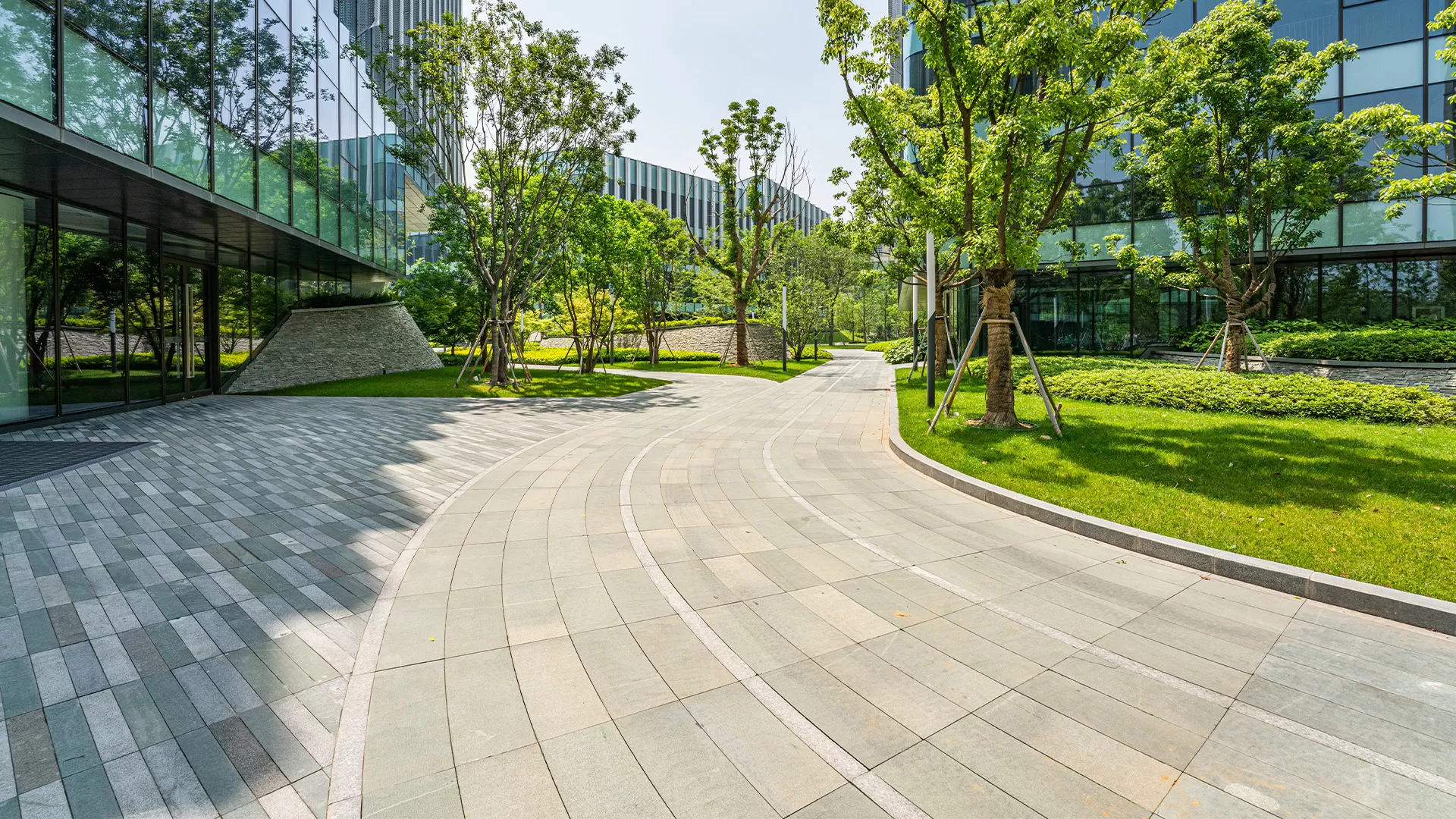
If you want inviting outdoor areas that guide movement and encourage gathering, our Southeast MI commercial landscaping company can help with the , walkways, decks, picnic spaces, and gazebo structures. We’ll take care of the grading, base work, drainage, and installation of durable surface materials, connecting entries, parking areas, and amenities while still defining distinct zones.
Learn more about commercial patio and walkway installation below.
What Are the Benefits of a Custom Commercial Patio?
Commercial patio construction adds usable space and creates a more inviting environment for customers, tenants, and employees. Whether it’s used for seating, dining, or gathering areas, a custom patio can improve both function and appearance while supporting the overall flow of your property.
- Expanded usable space: Patios create additional areas for seating, meetings, or outdoor service.
- Improved customer experience: Comfortable outdoor spaces encourage people to stay longer and return.
- Stronger visual appeal: A thoughtfully designed patio enhances the overall look of your property.
- Flexible design options: Materials, layouts, and features can be tailored to match your brand and building style.
- Increased property value: Quality hardscaping adds long-term value and makes the property more attractive to visitors or tenants.
How Can Walkways Integrate Into My Landscape Design?
Walkway installation for businesses does more than connect one point to another. Each pathway guides movement, defines spaces, and ties different elements of your landscape together. With the right layout and materials from our commercial landscape design contractors, walkways can beautifully complement surrounding features like plant beds, trees, and open green areas.
Depending on the look you’re going for, materials such as concrete, brick pavers, or natural stone can be chosen. For example, a brick walkway can match an existing patio, while natural stone may pair well with landscaped areas that include shrubs and decorative plants. The goal is to create a consistent look that feels intentional rather than separate.
Placement also matters. Walkways can be designed to lead visitors naturally to entrances, seating areas, or focal points. Curved paths can soften the landscape and work well around trees and garden beds, while straight paths offer a more direct, formal look often suited for office or retail spaces.