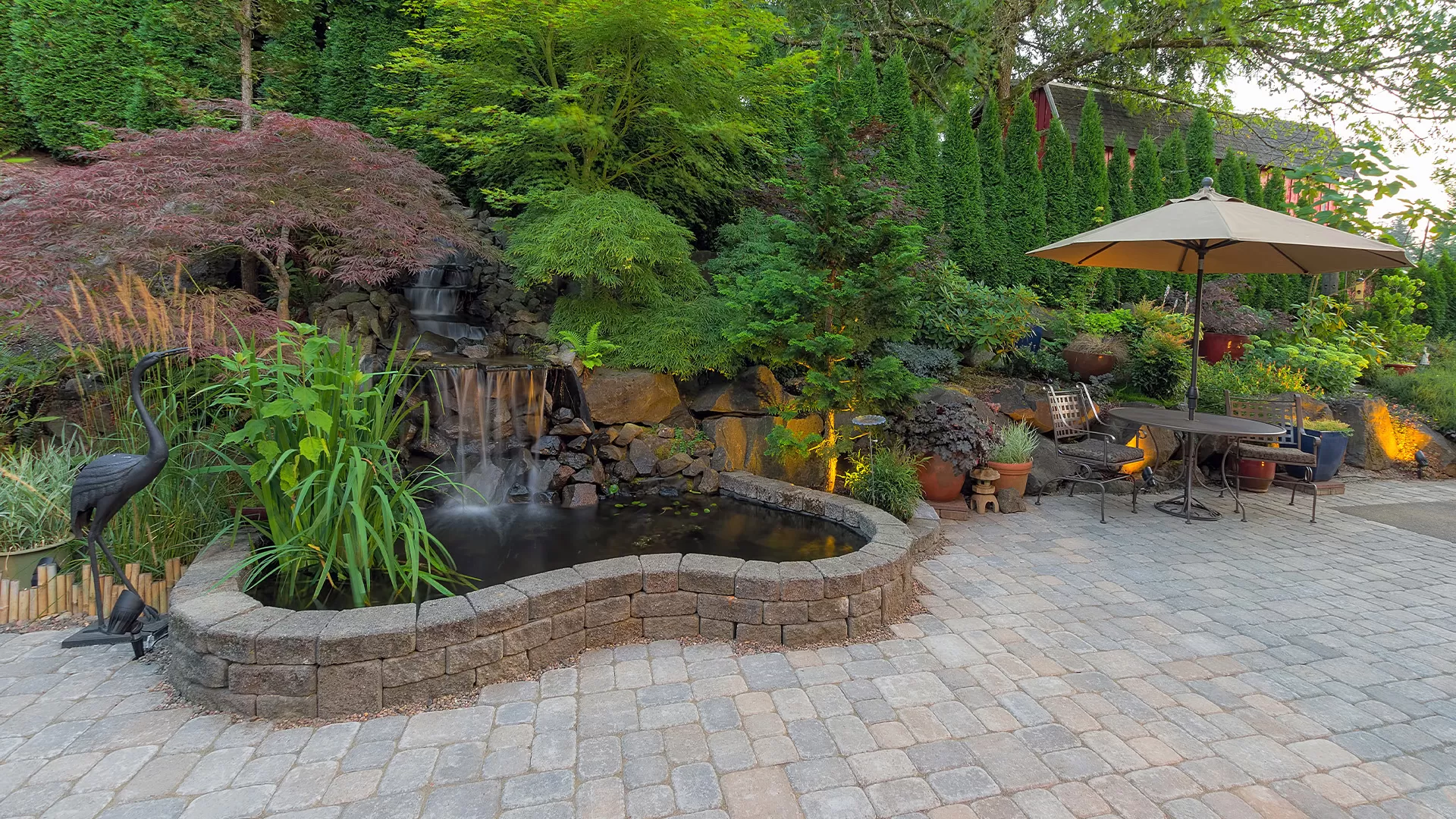
The or walkway creates clear, functional paths and gathering areas using materials like pavers, natural stone, or concrete. Each design is planned by Southeast MI residential landscaping company to suit traffic flow of family members or guests, layout, and existing features. Installation then includes proper grading, a solid base, and clean jointing for a smooth finish. The result? A well-defined surface that connects key areas of the property while adding comfort, access, and visual continuity throughout the landscape.
Learn more about residential patio and walkway installation below.
What Are the Benefits of a Custom Patio?
Residential patio construction adds usable space and creates a more inviting environment for family and friends. Whether it’s used for dining or general gathering purposes, a custom patio can improve both function and appearance while supporting the overall flow of your property.
- Expanded available space: Patios create additional areas for seating when guests come over or you want to relax outside with family.
- Stronger visual appeal: A thoughtfully designed patio enhances the overall look of your property.
- Flexible design options: Materials, layouts, and features can be tailored to match your home’s style.
- Increased property value: Quality hardscaping adds long-term value while you’re living there and if you decide to sell your home.
How Can Walkways Integrate Into My Landscape Design?
Walkway installation for homes does more than connect one point to another. Each pathway guides movement, defines spaces, and ties different elements of your landscape together. With the right layout and materials from our residential landscape design contractors, walkways can beautifully complement surrounding features like plant beds, trees, and open green areas.
Depending on the look you’re going for, materials such as concrete, brick pavers, or natural stone can be chosen. For example, a brick walkway can match an existing patio, while natural stone may pair well with landscaped areas that include shrubs and decorative plants. The goal is to create a consistent look that feels intentional rather than separate.
Placement also matters. Walkways can be designed to lead people naturally to an entrance, seating area, or focal point. Curved paths can soften the landscape and work well around trees and garden beds, while straight paths offer a more direct, formal look.